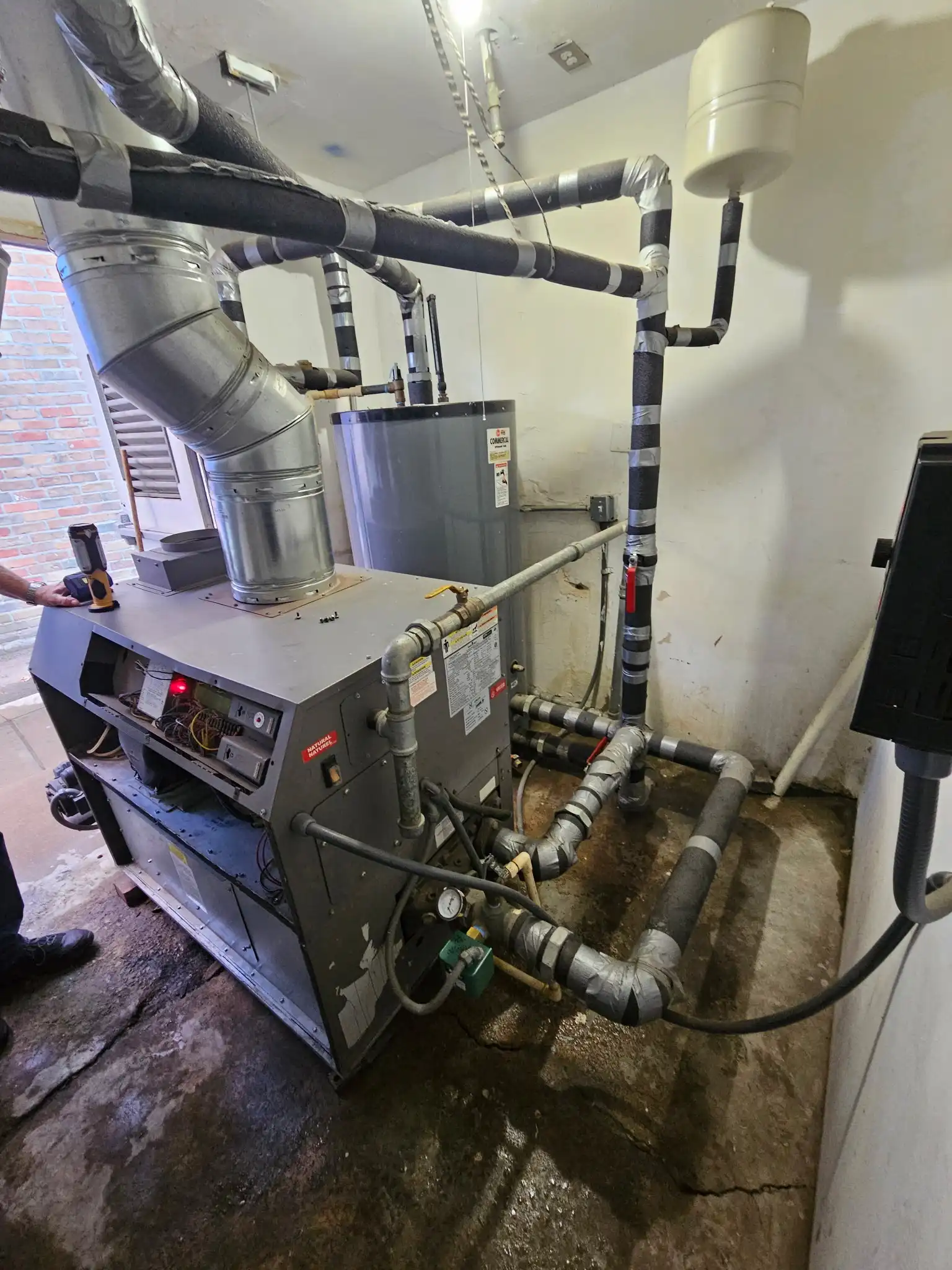
Boilers in Houston, TX should be serviced at least once a year, ideally scheduled in early fall before cold weather arrives. Houston’s high humidity, moderately hard water, and long periods of boiler inactivity during the warm months create specific conditions that accelerate corrosion, scale buildup, and ignition failure. Annual servicing helps catch these issues before they turn into costly breakdowns, keeps manufacturer warranties valid, and ensures safe operation by checking for carbon monoxide risks. Commercial boilers in Texas are also subject to inspection requirements under the Texas Boiler Law regulated by the Texas Department of Licensing and Regulation (TDLR).
Why Boiler Servicing Matters More in Houston Than You Might Think
Houston is not the first city that comes to mind when people think about boiler problems. The climate is warm, the winters are short, and a lot of homeowners spend the better part of the year not thinking about their heating system at all. That’s exactly what makes boiler repair near Houston, TX a bigger conversation than most people expect.
When a cold front rolls in off the Gulf, it does not arrive slowly. Temperatures can drop 30 to 40 degrees within a single day. A boiler that has been sitting idle since February is suddenly being asked to run at full output, and if no one has looked at it since last winter, that is when problems surface. Ignition failures, pressure issues, cracked seals, and seized circulator pumps are far more common in systems that have gone without attention through a long Houston summer.
How Often Should You Actually Service a Boiler?
The standard recommendation from boiler manufacturers and licensed heating professionals is once every 12 months. That holds true regardless of fuel type, system size, or how mild your winter felt. Annual servicing is the minimum, not the ideal maximum.
For older systems, that baseline changes. A boiler that is 15 years or older should be looked at more frequently. Component wear accelerates with age, and the window between a minor issue and a major failure gets narrower each year. If your system is in that range and has not been serviced in over a year, it deserves attention sooner rather than later.
If you own a commercial property in Houston, the frequency question has a legal dimension. Under Texas Boiler Law, Chapter 755 of the Texas Health and Safety Code, the Texas Department of Licensing and Regulation requires registered boilers to hold a current Certificate of Operation. Power boilers must be inspected annually, hot water and steam heating boilers every two years, and hot water supply boilers every three years. Failing to meet these timelines can result in late fees, penalties, and boilers being taken out of service until compliance is confirmed. These TDLR-mandated inspections are separate from routine service visits, and most building owners should have both.
For residential boilers over 200,000 BTU, Texas requires state inspections on a three-year cycle. Smaller residential water heaters under that threshold do not require state inspections, but annual service visits are still strongly advised to protect the system and any existing warranty.
What Houston’s Climate Does to a Boiler Over Time
This is where local knowledge really matters, and it is something a technician from outside the region might not immediately flag. Houston’s humidity averages above 75% year-round. That persistent moisture accelerates internal corrosion inside boiler components, particularly in older cast iron systems or any system that lacks a proper water treatment routine. Oxygen-rich water without adequate chemical treatment causes pitting in heat exchanger surfaces and compromises gasket seals over time. The result is reduced efficiency and, eventually, components that fail ahead of their expected lifespan.
Houston’s water supply adds a second layer of complexity. The water here is moderately hard, meaning it carries elevated levels of calcium and magnesium. As water cycles through the system repeatedly, those minerals deposit on the heat exchanger as scale. Scale acts as an insulator, forcing the boiler to work harder to produce the same amount of heat. Left unaddressed, it shortens the life of the system and drives up energy costs.
The stop-and-start nature of Houston’s heating season creates its own wear pattern too. Circulator pumps that sit for months and are then asked to run continuously during a cold snap experience a form of mechanical stress that steady-use systems do not face. Pressure relief valves and ignition components are also more prone to degradation when they cycle in and out of months of non-use.
These are not theoretical risks. They show up regularly as real-world problems for Houston homeowners. A good boiler maintenance in Texas service visit specifically addresses all of these, including flushing sediment, checking water chemistry, testing pressure relief valves, inspecting the flue, and verifying carbon monoxide levels.
What Happens During a Professional Boiler Service Visit?
A thorough service appointment typically takes between 45 and 90 minutes. Here is what a licensed technician should be doing during that visit:
- Inspecting the entire unit for signs of corrosion, cracks, or leaks
- Cleaning and inspecting the heat exchanger to remove scale and deposits
- Testing and verifying all safety devices, including the pressure relief valve and low-water cutoff
- Checking gas pressure and flame color for signs of incomplete combustion
- Inspecting and clearing the flue of any blockages
- Flushing sediment from the system
- Testing for carbon monoxide output
- Checking circulator pump function and overall system pressure
- Reviewing all controls and thermostat connections
- Documenting the visit for warranty and compliance records
That last point matters more than people realize. Manufacturers frequently require documented annual maintenance to honor warranty claims. If your boiler fails and you cannot show service records, the manufacturer can and often will deny coverage, leaving you responsible for the full cost of repair or replacement.
If it has been more than a year since your last service, or you recently moved into a home and have no idea when the previous owner had it looked at, the team at G.O. Plumbing can assess your system and get you on a proper maintenance schedule. Give them a call at +1 713-827-7771 and ask about their boiler service options.
Signs Your Boiler Needs Service Before the Annual Visit
Annual servicing is the standard rhythm, but some situations call for attention outside that schedule. Do not wait for the next planned visit if you notice any of the following:
- Unusual noises coming from the unit, including banging, kettling, or gurgling sounds
- Inconsistent heat or hot water output
- A yellow or orange flame instead of a steady blue one
- Visible corrosion, rust staining, or moisture around the unit
- Pressure gauge readings that are consistently too high or too low
- A noticeable increase in your energy bill without a change in usage
- The boiler is frequently cycling on and off without completing a heating cycle
- Any smell of gas near the unit
Carbon monoxide is a risk that deserves special mention. It is colorless, odorless, and invisible, which means a gas boiler can be leaking it into your home without any obvious sign. If your CO detector activates, do not attempt to troubleshoot the boiler yourself. Get everyone out of the home, call 911, and contact a licensed professional immediately.
The Best Time of Year to Schedule Service in Houston
Most technicians recommend booking your annual boiler service in early fall, before Houston’s cold fronts begin arriving in earnest. There are practical reasons for that timing. Technicians have more scheduling availability before the heating season rush, parts and service windows are easier to arrange, and you are not calling for help in the middle of an emergency. Getting the service done in September or October means your system has been inspected, cleaned, and cleared for operation before it is actually needed.
If you missed that window and find yourself in December with a unit you haven’t had looked at in over a year, schedule it anyway. A service during winter is still far better than no service at all, and it can catch problems that are already developing before they result in a complete breakdown during a cold snap.
When It Might Be Time for a New Boiler
If your system is approaching or past the 15 to 20 year mark, annual servicing is still worth doing, but it is also worth having an honest conversation with a technician about the unit’s remaining lifespan. At some point, the cost of keeping an aging boiler running becomes greater than the cost of replacing it with a newer, more efficient model. A boiler installation in Texas can often be done more affordably than homeowners expect, especially when you factor in the energy savings from a modern condensing system.
If you’re weighing repair versus replacement on an older system, the experts at G.O. Plumbing can walk you through the options with no pressure and honest recommendations. Reach out at +1 713-827-7771 to schedule a consultation.
Frequently Asked Questions
1. How often should I service my boiler in Houston, TX?
At minimum, once a year. Houston’s humidity, hard water, and long off-seasons create specific conditions that make annual servicing more important here than in drier climates. Schedule it in early fall before cold weather hits for best results.
2. Is boiler servicing required by law in Texas?
For commercial, industrial, and public-use boilers, yes. The Texas Department of Licensing and Regulation (TDLR) requires registered boilers to hold a Certificate of Operation and be inspected on schedules ranging from annually to every three years depending on boiler type. Residential boilers over 200,000 BTU also require state inspections every three years. Annual service visits are not legally mandated for residential systems but are strongly recommended.
3. What happens if I don’t service my boiler every year?
Skipping annual service can void your manufacturer’s warranty, reduce system efficiency, increase the risk of carbon monoxide exposure, and lead to expensive emergency repairs. Unserviced boilers also tend to fail during cold weather events, exactly when you need them most.
4. How much does a boiler service cost in Houston?
Costs vary based on system type, age, and what the technician finds during the visit. A routine annual service is significantly less expensive than emergency repair or boiler replacement. It is one of the better investments you can make in your home’s heating system.
5. What does a boiler service actually include?
A thorough service covers inspection for leaks and corrosion, cleaning the heat exchanger, testing safety devices and pressure relief valves, checking flame color and gas pressure, clearing the flue, flushing sediment, and testing for carbon monoxide. The technician should document the visit for warranty purposes.
6. Why does my boiler make noise after sitting unused all summer?
Banging, gurgling, or kettling sounds after a long idle period are often caused by sediment buildup or air in the system. These are common in Houston due to the hard water and stop-start usage patterns. A service visit can flush the system and bleed the lines to resolve these issues.
7. Can I service my own boiler in Texas?
Routine visual checks and monitoring pressure levels are fine for homeowners to do on their own. However, servicing a gas boiler, including inspecting the flue, testing safety valves, or working on combustion components, requires a licensed technician in Texas. DIY work on gas systems is both unsafe and non-compliant with state regulations.
8. Does Houston’s humidity really affect my boiler?
Yes, significantly. Houston averages above 75% humidity year-round, which accelerates internal corrosion in boiler components, especially in older cast iron systems. Without proper water treatment and routine maintenance, this corrosion degrades heat exchanger surfaces and seals over time.
9. How do I know if my boiler is producing carbon monoxide?
You cannot detect CO by sight or smell. The safest approach is to have a working carbon monoxide detector installed near your boiler and to have your system professionally serviced annually to check combustion efficiency and flue integrity. If your CO detector activates, leave the building immediately and call emergency services.
10. Should I repair or replace my boiler if it’s over 15 years old?
It depends on the condition of the unit and the cost of repairs relative to its remaining lifespan. A well-maintained boiler can last 15 to 20 years. If repair costs are approaching 50% or more of what a new system would cost, or if the boiler is failing frequently, replacement often makes more financial sense. A licensed plumber can help you evaluate the options honestly.