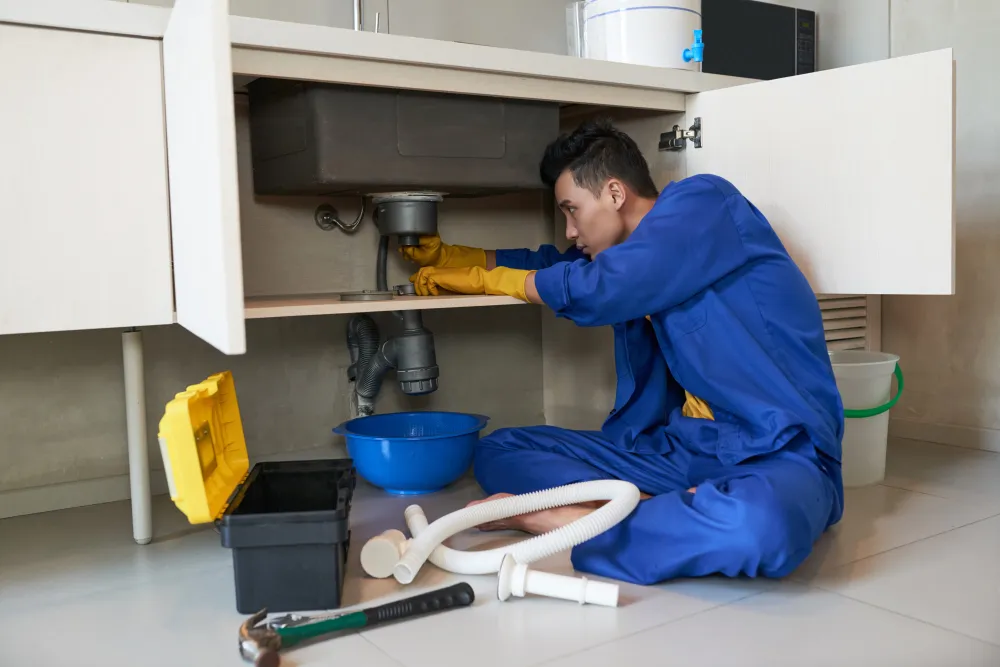
If two or more drains in your home are backing up at the same time, the problem is almost always in your main sewer line, not in a single fixture. Stop using all water immediately, avoid chemical drain cleaners, check your sewer cleanout if you have one, and call a licensed plumber. In Houston, this is commonly caused by grease buildup, tree roots, or aging clay pipes shifting in the area’s expansive soil.
If you’ve ever flushed a toilet and watched water rise in the shower instead, you already know this isn’t your average clog. One slow sink, sure, that happens to everyone. But when your kitchen sink, your bathtub, and your toilet all decide to act up on the same afternoon, something bigger is going on underground. Here’s what’s actually happening, why it tends to hit Houston homes a little differently, and what you should do about it before it turns into a much bigger mess.
Why Do Multiple Drains Back Up at the Same Time?
Think of your home’s plumbing like a tree. Every sink, tub, shower, and toilet is a branch, and all those branches eventually feed into one trunk: your main sewer line. If a single branch gets blocked, say your bathroom sink fills up with hair and soap scum, only that one fixture is affected. But when the trunk itself is blocked, none of the branches can drain properly, and wastewater starts looking for the next easiest way out, which is usually the lowest drain in the house. That’s why a backed-up main line so often shows up first in a tub, a floor drain, or the lowest toilet in the home. If you’re dealing with this kind of widespread backup and want it handled right the first time, working with an experienced drain cleaner plumber in Houston, TX who can actually diagnose the main line rather than just plunging the symptom makes a real difference.
Common Causes Behind a Houston Home’s Multi-Drain Backup
A few things tend to cause this more in Houston than in other parts of the country, and it’s worth knowing them so you can spot trouble early.
- Grease and cooking oil. This is the big one locally. Fats, oils, and grease poured down kitchen sinks and “flushable” wipes flushed down toilets are behind roughly 70 percent of sewer overflows across the city, and the problem gets worse in colder months when grease hardens faster inside the pipe.
- Tree roots. Houston has no shortage of mature oaks and other trees, and their roots are drawn straight to the moisture inside a sewer line. Even a hairline crack in an old clay pipe is enough to let a root in, and once it’s in, it grows fast and traps everything else flowing past it.
- Shifting clay soil. The expansive clay soil common across the Houston area swells when it rains and shrinks during dry spells. That constant movement is hard on older pipes and can create a “belly,” a low spot where waste collects instead of flowing through.
- Aging infrastructure. A lot of homes in neighborhoods built in the 70s through 90s are now running on sewer lines that are 30, 40, even 50 years old. Pipes don’t fail overnight, but they do wear out, especially older cast iron and clay.
- Non-flushable items. Paper towels, baby wipes, and hygiene products don’t break down the way toilet paper does. They snag on rough spots inside the pipe and build into a dense clog over time.
What to Do the Moment You Notice It
Here’s the part that matters most: what you do in the next ten minutes can save you from a much worse situation.
- Stop using water entirely. No flushing, no dishwasher, no laundry. Every gallon you add to the system increases pressure and raises the odds of sewage actually entering your living space.
- Locate your sewer cleanout if you have one. It’s usually a white or black capped pipe near your foundation or somewhere in the yard. If there’s standing water inside it, the blockage is likely further down on the city’s side. If it’s dry but your fixtures are still backing up, the issue is in your private line.
- Skip the chemical drain cleaners. They won’t touch a main line clog, and the trapped fumes from the chemicals mixing with sewer gas can vent back out through every drain in the house, which is a health hazard, not a fix.
- Don’t try to force it open yourself with a plunger or small handheld snake. Main line clogs sit too deep for those tools, and pushing too hard can crack a pipe that was already weakened.
- Call a licensed plumber. This isn’t a DIY situation once more than one fixture is involved. A professional with the right cameras and jetting equipment can find the exact cause and clear it without guesswork. If you’d rather not wait around wondering whether it’s your line or the city’s, you can call G.O. Plumbing at +1 713-827-7771 and have someone walk you through it over the phone before they even arrive.
How a Plumber Actually Diagnoses the Problem
Once a professional is on site, the process is more straightforward than most homeowners expect. A camera, basically a small waterproof lens on a flexible cable, gets fed into the cleanout or an accessible drain. This lets the plumber see directly inside the pipe: where the clog is, what it’s made of, whether roots have gotten in, and whether the pipe itself is cracked, offset, or sagging. From there, the fix usually falls into one of a few categories.
- Hydro jetting, which uses high-pressure water to blast through grease and root masses and scour the full width of the pipe, not just punch a hole through the middle of the clog.
- Mechanical augering or rodding, which works well for solid blockages and is often used alongside jetting.
- Spot repair is used when the camera shows one isolated crack or break rather than widespread damage.
- Full line replacement is reserved for older lines with multiple problem areas, like repeated bellies, root intrusion, and corrosion.
For homes that keep having this happen every year or two, it’s often less about bad luck and more about an aging line that needs a real look. A commercial sewer drain cleaning service approach, regular jetting and inspection rather than waiting for the next emergency, tends to save money over time compared to repeated emergency calls.
Is This Different for Commercial Properties?
Yes, and if you run a restaurant or any food service business in Houston, there’s a regulatory side to this too. City ordinance requires every grease trap or interceptor inside city limits to be fully pumped out at least every 90 days, sooner if an inspection shows grease and solids taking up 25 percent or more of the trap’s depth. Skip this and you’re not just risking a backup, you’re risking fines that run from $250 to $2,000 per violation, plus the very real possibility of a backed-up kitchen during your busiest shift. Scheduling commercial grease trap cleaning in Texas on a set calendar instead of waiting for warning signs is one of the simplest ways operators avoid both the mess and the citation.
Don’t Forget About Backflow Testing
Here’s something a lot of homeowners and business owners don’t realize is connected to this whole picture. The City of Houston legally requires annual testing of backflow prevention assemblies, the devices that stop contaminated water from siphoning backward into the clean water supply during a pressure drop. This applies after installation, after any repair, and every year after that, and only a TCEQ-licensed tester can perform it and submit the report. Skipping it isn’t just a compliance issue, it can mean fines up to $2,000 a day or having your water service shut off entirely. If it’s been a while since your last test, getting backflow testing near Houston scheduled is worth doing before it becomes a problem you didn’t see coming.
How to Lower Your Risk Going Forward
A multi-drain backup rarely happens out of nowhere. There are almost always warning signs days or weeks ahead, slow drains, occasional gurgling, and a faint sewer smell near a floor drain. Paying attention to those early signals and staying ahead of maintenance is the best defense.
- Never pour grease or cooking oil down the kitchen sink; even small amounts add up over months.
- Avoid flushing wipes, paper towels, or hygiene products, even ones labeled “flushable.”
- If you have large trees near your sewer line, consider a camera inspection every few years, especially if your home is more than a couple of decades old.
- Get your main line jetted or inspected on a routine schedule rather than waiting for symptoms.
- Check whether your homeowners’ insurance actually covers sewer backups; most standard policies don’t unless you’ve added a specific rider.
Final Thoughts
A single slow drain is annoying. Multiple drains backing up at once is your home telling you something is wrong further down the line, and it’s not something a bottle of drain cleaner or a few minutes with a plunger is going to fix. The good news is that once you know what’s causing it, the fix is usually pretty predictable for a professional with the right equipment.
If you’re dealing with this right now, or just want someone to take a look before it turns into an emergency, G.O. Plumbing has been handling these calls across Houston for over three decades. Give them a call at +1 713-827-7771 and they’ll get you sorted out.
Frequently Asked Questions
1. Why are all my drains backing up at the same time?
This almost always means the blockage is in your main sewer line rather than in one individual fixture. Since every drain in your house connects to that single line before reaching the city sewer, a blockage there affects everything at once.
2. Is it normal for the toilet to bubble when I run the washing machine?
No, that’s actually a classic warning sign of a main line clog. Air and water are being forced back up through the path of least resistance, which is often the toilet, because the main line can’t handle the added flow.
3. Can I use Drano or Liquid Plumber for a multi-drain backup?
You shouldn’t. Chemical drain cleaners aren’t strong enough to clear a main line blockage, and the fumes from the chemicals mixing with trapped sewer gas can back up into every drain in your house, creating a health hazard rather than solving anything.
4. How do I know if the problem is on my property or the city’s side?
Check your sewer cleanout, usually a capped pipe in your yard or near your foundation. If there’s standing water in it, the blockage is likely downstream on the city’s line. If it’s dry but your fixtures are still backing up, the issue is on your private line.
5. What causes sewer backups in Houston specifically?
Locally, the biggest culprits are grease and oil poured down kitchen drains, tree roots getting into older clay pipes, and the area’s expansive clay soil shifting and putting stress on aging sewer lines.
6. How much does it cost to fix a main sewer line clog?
It depends heavily on the cause. A straightforward jetting service to clear grease or roots costs far less than a spot repair or full line replacement, which is why a camera inspection upfront is worth it; it tells you exactly what you’re dealing with before any work starts.
7. Does homeowners’ insurance cover sewer backups?
Usually not by default. Most standard policies exclude sewer backup damage unless you’ve specifically added a sewer backup or service line rider, so it’s worth checking your policy before you actually need it.
8. How often should a grease trap be cleaned for a restaurant in Houston?
City ordinance requires full evacuation at least every 90 days, but if an inspection shows grease and solids taking up 25 percent or more of the trap’s depth, it needs to be cleaned sooner regardless of the calendar.
9. What happens if I don’t get my backflow preventer tested every year?
Houston requires annual testing for all backflow prevention assemblies, and failing to comply can result in fines of up to $2,000 per day or having your water service disconnected entirely.
10. Should I stop using water if multiple drains are backing up?
Yes, immediately. Running the dishwasher, doing laundry, or flushing toilets while a main line is blocked only adds more water and pressure to a system that already has nowhere for it to go, increasing the chance of sewage backing up into your home.