Skipping backflow testing in Texas can result in fines of up to $2,000 per day, suspension of water service, and civil liability if contamination occurs. The Texas Commission on Environmental Quality (TCEQ) mandates annual testing of all backflow prevention assemblies. In Houston specifically, the City of Houston’s Cross-Connection Control Program enforces these rules and requires tests to be submitted by TCEQ-licensed testers who are also registered with the city. Property owners, not the water utility, are responsible for the cost and compliance.
Most people don’t think about their backflow preventer until something goes wrong. It’s one of those components that sits quietly on a water line, doing its job without drawing attention. But here’s the thing: that device has internal springs, seals, and moving parts that degrade over time, and a visual inspection tells you almost nothing about whether it’s actually working. That’s exactly why Texas law requires certified testing, not just a quick look.
If you own commercial property, run a business, or manage a facility in the Houston area, understanding what happens when backflow testing gets skipped isn’t just good to know. It can protect you from fines, legal exposure, and the kind of water contamination event that makes headlines for the wrong reasons. A backflow inspection in Texas isn’t optional paperwork. It’s a legal requirement with real consequences attached to it.
What Is Backflow and Why Does It Matter?
Backflow is what happens when water flows in the wrong direction through your plumbing. Instead of clean, pressurized water moving from the municipal supply into your building, the flow reverses. This can happen in two ways. Backpressure occurs when pressure on your side of the system, from a boiler, pump, or storage tank, exceeds the supply pressure. Back-siphonage happens when there’s a sudden drop in supply pressure, like during a nearby water main break or a large fire hydrant draw, creating a vacuum that pulls water backward.
When that reversal happens without a properly working backflow preventer in place, whatever is on the downstream side of that connection can enter the drinking water supply. Pesticides and fertilizers from irrigation lines. Chemicals from industrial processes. Bacteria from cooling towers or boilers. Even sewage. The TCEQ cites examples where a garden hose submerged in a tank of mixed pesticide created a cross-connection that contaminated an entire supply line. Pathogens including E. coli, Salmonella, and Giardia have been documented in backflow contamination events. The health consequences range from gastrointestinal illness to serious infection to, in extreme cases, fatality.
The properties most commonly required to have backflow preventers and regular testing in Texas include restaurants, hospitals, dental offices, car washes, dry cleaners, facilities with irrigation or fire suppression systems, commercial boilers, cooling towers, and any industrial site with a direct connection to the municipal water system. That covers a significant portion of commercial real estate in Harris County.
Texas Backflow Testing Requirements: What the Law Actually Says
Backflow prevention in Texas is governed by the Texas Commission on Environmental Quality under Title 30, Chapter 290 of the Texas Administrative Code, which sets the statewide rules for public drinking water. Under TCEQ’s Cross-Connection Control and Backflow Prevention Program, every public water system in the state is required to establish its own backflow prevention program. This is why the rules look slightly different city to city, but the foundation is the same statewide mandate.
The core requirement is straightforward: backflow prevention assemblies must be tested upon installation and at least once every 12 months after that. If additional hazards exist at a facility, more frequent testing may be required. When you need backflow testing near Houston, TX, it’s also worth knowing that Houston adds its own layer on top of the state requirements. The City of Houston’s Cross-Connection Control Program, managed by Houston Public Works, requires that testing be performed by someone who holds a current TCEQ Backflow Prevention Assembly Tester (BPAT) license and is separately registered with the City of Houston. A TCEQ license alone doesn’t satisfy Houston’s requirements. The completed test report must be submitted to Houston Public Works after each test, and reports from testers not on the city’s approved list are not recognized as valid.
The Real Penalties for Not Testing
This is where a lot of property owners get caught off guard. Non-compliance isn’t just a matter of receiving a strongly worded letter.
The City of Houston’s Cross-Connection Control Program can issue citations with fines of up to $2,000 per day for failure to comply with backflow prevention requirements. That’s not a one-time fine. It accumulates daily until you come into compliance. Across other Houston-area municipalities, including League City, Deer Park, and others operating under the TCEQ umbrella, the escalation typically follows the same pattern: first a notice of violation, then escalating enforcement, then termination of water service.
Water service termination is the practical worst case for most businesses. A restaurant, car wash, medical office, or any water-dependent commercial operation simply cannot function without water. The cost of coming into sudden compliance under enforcement pressure, including emergency scheduling of a licensed tester, potential repairs if the device fails its test, and permit fees, almost always exceeds what routine annual testing would have cost.
Beyond fines and shutoff, there’s legal liability. If a backflow event occurs at a property where testing has been neglected and someone is harmed by contaminated water, the property owner is not protected by ignorance of the requirement. Texas places responsibility for testing, maintenance, and repair costs squarely on the property owner, not the water utility. That means in the event of a contamination incident tied to a failed or untested device, civil liability and health department involvement are on the table.
If you’re a Houston property owner who isn’t sure whether your backflow preventer is current on testing or even whether you have one installed, this is a good moment to get that sorted. The team at G.O. Plumbing has licensed backflow testers on staff who are registered with the City of Houston and know this process end to end. A quick call to +1 713-827-7771 is a lot less complicated than navigating a citation.
Why Annual Testing Can’t Be Replaced by a Visual Check
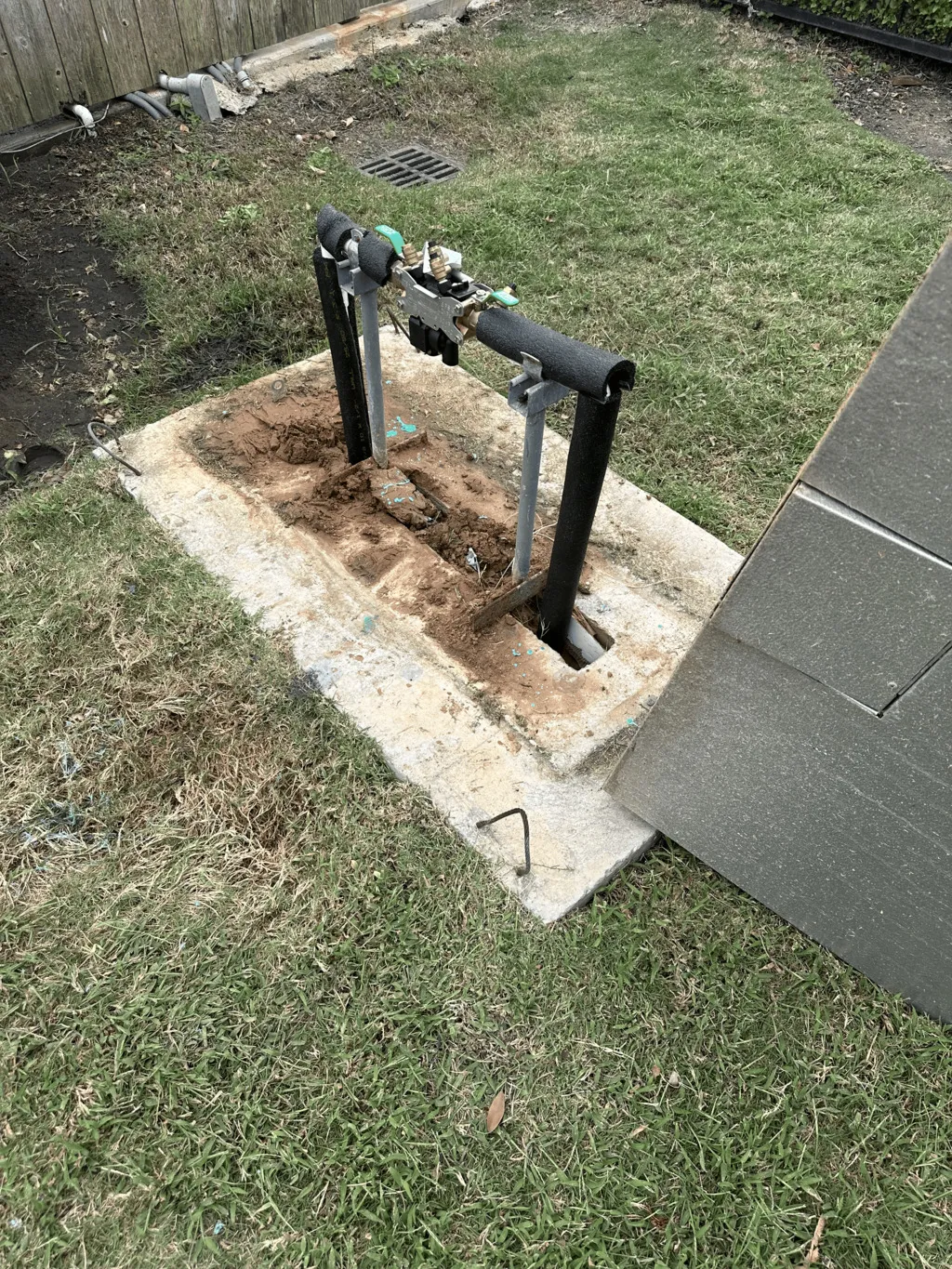
One of the most common misconceptions is that if the backflow preventer looks fine on the outside, it’s probably working. That’s not how these devices operate. A properly functioning backflow preventer relies on internal check valves, springs, and elastomeric seals. Any of these components can fail without producing any external sign. A device can look perfectly intact and still allow contaminated water to reverse into the potable supply.
Certified testing involves connecting calibrated gauges to the device, creating controlled pressure differentials, and verifying that each internal check valve seats and holds within specifications. This can only be done with the right equipment by a licensed professional. The TCEQ and the City of Houston both require that testers’ gauge calibration certificates be current on an annual basis as well, which adds another layer of quality control to the process.
The test itself typically takes about an hour for a standard device. If it passes, you receive a test report, the tester submits it to the appropriate authority, and you’re compliant for another 12 months. If it fails, it must be repaired or replaced before being returned to service. Repairs to backflow prevention assemblies must use manufacturer-approved parts, and new installations or replacements must be performed by a licensed plumber.
Who Needs a Backflow Preventer Tested and How Often
The question of whether your property requires backflow preventer testing comes down to whether you have a cross-connection. A cross-connection is any physical link between the potable water supply and a source of contamination. They’re more common than most people realize.
- Any commercial property with a lawn irrigation or sprinkler system requires a backflow preventer, typically a pressure vacuum breaker or reduced pressure zone assembly.
- Fire suppression systems connected to the municipal supply require an approved device, usually a double check valve assembly or reduced pressure zone assembly.
- Commercial boilers and cooling towers require backflow protection because the water in these systems is treated with chemicals that must not re-enter the drinking water supply.
- Any facility using chemical injection systems, including car washes and industrial cleaning operations, requires a reduced pressure zone assembly due to the high hazard level.
- Healthcare facilities including dental offices, hospitals, and veterinary clinics all carry cross-connection risk from the nature of the equipment and materials used.
- Restaurants and food service operations with spray connections, pre-rinse units, or carbonated beverage systems often require testing as well.
For most of these, annual testing is the minimum. Some high-hazard installations may require testing twice a year or after any repair or relocation of the device.
What to Expect During a Certified Backflow Test
The testing process is not disruptive to operations in most cases. A licensed tester arrives, locates the assembly, and connects differential pressure gauges to the test cocks on the device. The internal checks are tested in sequence by closing shutoff valves and observing pressure behavior. The whole process for a standard device is typically around one hour.
After the test, the tester completes an official test and maintenance report. In Houston, this report must be submitted to the Cross-Connection Control Program. You receive a copy for your records. Property owners in Texas are responsible for maintaining records of all installation, maintenance, and testing activity, which must be provided to the water authority upon request.
If the device fails, the tester will document the failure mode. Repair must follow before the device is placed back in service, and a retest is required after repair to confirm it’s functioning correctly.
How to Stay Ahead of Compliance
The simplest thing any Houston-area property owner can do is set an annual reminder tied to the month of their last successful test and schedule the next one before the 12-month window closes. Cities in the Houston metro send reminder or overdue letters to property owners, but waiting for that letter means you’re already in the compliance window and running close to an enforcement threshold.
Staying current on testing is genuinely inexpensive compared to the alternatives. A certified test, professionally handled and properly reported, takes the issue entirely off your plate for another year.
G.O. Plumbing offers certified backflow testing and repair services throughout Houston and the surrounding area. Their team includes TCEQ-licensed and City of Houston-registered backflow testers who handle the entire process, from the test itself to report submission. If your device needs repair or replacement, they can handle that too, since backflow preventer installation in Houston must be performed by a licensed plumber. Reach out at +1 713-827-7771 to schedule your annual test before your compliance deadline.
Frequently Asked Questions About Backflow Testing in Texas
1. How often does a backflow preventer need to be tested in Texas? In Texas, backflow prevention assemblies must be tested at the time of installation and at least once every 12 months after that. Some high-hazard installations may require more frequent testing. This is mandated statewide by TCEQ and enforced locally by each city’s water utility.
2. What happens if I don’t get my backflow preventer tested in Houston? The City of Houston can issue citations with fines of up to $2,000 per day for non-compliance. If you continue to ignore enforcement notices, the city has the authority to suspend your water service until you come into compliance.
3. Who is legally responsible for backflow testing in Texas? The property owner is responsible. Texas law places the cost and responsibility for installation, testing, maintenance, and repair of backflow prevention assemblies on the property owner, not the water utility.
4. Can any plumber test a backflow preventer in Houston? No. In Houston, testing must be performed by someone who holds a current TCEQ Backflow Prevention Assembly Tester (BPAT) license and is also separately registered with the City of Houston’s Cross-Connection Control Program. Reports from unlisted testers are not accepted.
5. What is the difference between a backflow preventer and a check valve? A backflow prevention assembly is a testable device with multiple internal components, including check valves, relief valves, and shutoff valves, designed and certified for cross-connection control. A simple check valve is not an approved substitute for a testable backflow prevention assembly in Texas.
6. Does a residential property in Texas need backflow testing? It depends on whether there is a cross-connection present. Residential properties with irrigation systems, pools, or other non-potable water connections are commonly required to have a backflow preventer installed and tested annually. Purely domestic connections without cross-connections may not require a testable assembly.
7. How long does a backflow test take? Most standard backflow prevention assemblies can be tested in approximately one hour. The tester will connect calibrated gauges to the device, run through the required pressure checks, document the results, and submit the report to the appropriate authority.
8. What contaminants can enter my water if a backflow preventer fails? Depending on the cross-connection involved, backflow can introduce pesticides, fertilizers, pool chemicals, industrial chemicals, bacteria such as E. coli and Salmonella, and sewage into the potable water supply. The specific risk depends on what is connected on the downstream side of the backflow preventer.
9. What happens if my backflow preventer fails its test? If a device fails its certified test, it must be repaired or replaced before it can be returned to service. In Houston, repairs must use manufacturer-approved parts. After repair, the device must be retested and a new passing report submitted to confirm compliance.
10. How do I know if my property requires a backflow preventer? Any property with a cross-connection between the potable water supply and a non-potable source, including irrigation systems, fire suppression systems, boilers, cooling towers, chemical injection systems, or commercial kitchen equipment, typically requires a backflow prevention assembly. A licensed plumber or your local water utility’s Cross-Connection Control office can confirm the specific requirements for your property.